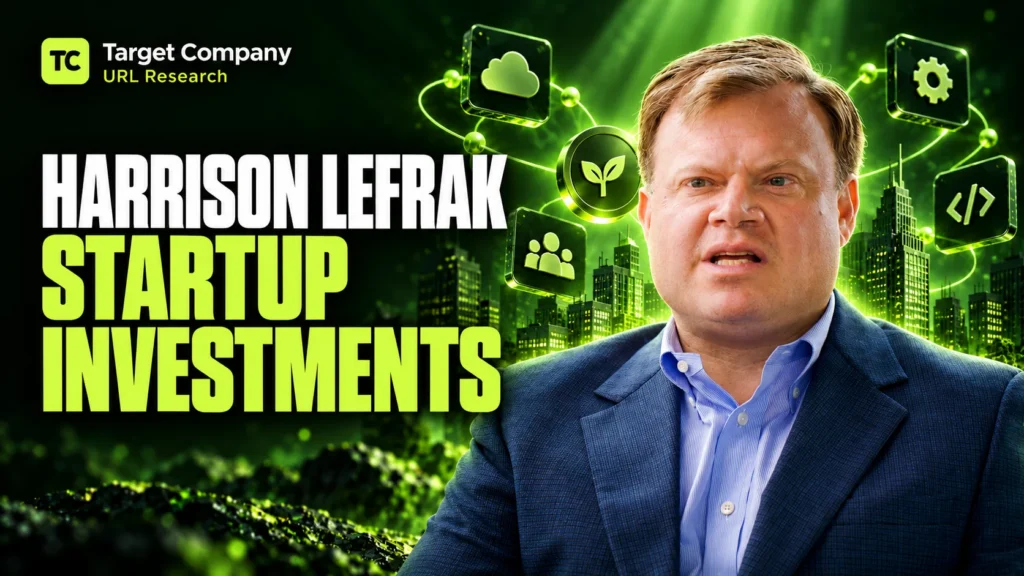
Harrison LeFrak’s public statements suggest that he views startups as opportunities to back businesses addressing meaningful commercial needs. His comments about Daybase connect innovation with changing workplace demands, while his earlier Senate testimony describes providing strategic capital to entrepreneurs across several industries.
The wider LeFrak investment platform adds context: its published approach emphasises flexible funding stages, industry knowledge and capital without a predetermined exit timetable.
Understanding Harrison LeFrak startup investments therefore requires two kinds of evidence: what he has said personally and what the organisation’s documented activities reveal.
He Has Discussed Startup Investing for More Than a Decade
Harrison LeFrak described startup investing as part of the family business in testimony before the U.S. Senate Committee on Finance on August 1, 2012.
He explained that LeFrak affiliates provided strategic capital to entrepreneurs and early-stage businesses in technology, financial services and healthcare. He also identified investments in companies across several American states.
This establishes that his involvement with emerging businesses predates many of the property technology deals associated with the LeFrak name today.
His testimony presented investment management alongside real estate development and energy exploration. Startup investing was already one component of a broader business platform, rather than an activity explained entirely by recent technology trends.
Daybase Shows How He Connects Innovation With Demand
Daybase provides a particularly useful example because Harrison commented directly on the investment.
In March 2022, the company announced a $9.6 million seed round led by True Ventures. Participating investors included the LeFraks, alongside other venture investors and real estate families.
Daybase’s proposition involved professional workspaces close to residential neighbourhoods, offering another option between working at home and commuting to a central office.
Harrison described its “Third Workplace” concept as increasingly relevant to companies’ real estate, data integrity and talent retention strategies. He also confirmed that his family’s firm was participating as a seed investor.
That statement suggests he saw several connected business needs behind the idea. The opportunity involved how employers organise work, how employees use space and how property owners respond to those changes.
It is a documented explanation of his enthusiasm at that time. It does not establish the investment’s eventual financial return.
Addepar Demonstrates an Interest Beyond Real Estate
Addepar is a clear example of a financing announcement that names Harrison LeFrak individually.
On May 13, 2014, Addepar announced a $50 million Series C round. Its release identified Harrison among the participating investors, alongside investors including Stanley Druckenmiller.
The company’s proposition centred on financial data, investment analysis and reporting. It addressed the difficulty of understanding complex portfolios and communicating that information effectively.
This example supports a broader interpretation of Harrison’s interests: his documented startup activity includes financial technology as well as businesses connected with property.
The amount needs careful reading, however. The $50 million was the total financing round, not a disclosed personal contribution from Harrison. The announcement does not specify his individual investment or ownership percentage.
Patient Capital Is Part of the Wider LeFrak Model
LeFrak’s official investment page describes affiliates participating across different stages of venture capital, from angel and seed financing through later venture rounds.
It also says their control over capital allows them to invest without a predetermined exit timetable. The organisation presents industry knowledge and relationships as additional support it can offer portfolio companies.
This creates a model in which funding can come with commercial experience and flexibility over timing.
For founders, the relevant implication is that investor fit may involve more than the financing stage. Industry connections and the expected ownership period can also matter.
These are the organisation’s published principles. They provide context for Harrison’s activities without establishing his private decision process for every investment.
Operating Experience Can Reveal Useful Technology
LeFrak’s operating businesses provide examples of where technology can address recognisable problems.
Dealpath, which identifies LeFrak among its investors, develops software for real estate investment teams. Its published descriptions discuss organising deal pipelines, analysing opportunities and supporting collaboration.
A separate example comes from Synco’s customer story about the LeFrak Organization. The account describes introducing its communication software across corporate and property teams to reduce fragmented conversations and make information easier to find.
That is a vendor-published account of a customer relationship, rather than independent proof of investment returns. It nevertheless illustrates a practical technology need within property operations.
Taken together, these examples help explain the potential relevance of an investor with operating experience. A business that encounters a problem directly may bring useful feedback about whether a proposed solution works in practice.
Personal Investments and Family Investments Need Different Labels
The LeFrak name can refer to Harrison, the family or an affiliated investment entity. Original announcements do not always identify the same investor.
| Example | What the reviewed source establishes |
|---|---|
| Addepar | Harrison LeFrak was individually named among investors |
| Daybase | The LeFraks participated, and Harrison discussed his family firm’s investment |
| Dealpath | The company identified LeFrak among its investors |
Keeping these distinctions clear prevents an organisational portfolio from becoming an unsupported list of Harrison’s personal holdings.
The sources reviewed also do not establish his standard investment amount, complete personal portfolio or realised returns. A successful fundraising announcement alone cannot answer those questions.
Similarly, a public expression of confidence reveals what an investor valued at a particular moment. It does not disclose every condition considered before committing capital.
What Startup Founders Can Learn From the Evidence
The clearest lesson is to explain the business problem behind the product.
Daybase’s announcement connected its concept with workplace decisions. Addepar described a financial information problem. Dealpath’s materials explain the workflow its software supports.
For a founder, that suggests a useful preparation exercise: identify the customer, explain the existing difficulty and show how the proposed solution improves the process.
Also consider what an investor can contribute beyond money. Relevant operating experience may help with product feedback, commercial introductions or understanding how customers make purchasing decisions.
These are practical lessons drawn from the public record, rather than a claimed Harrison LeFrak investment checklist. His documented comments point towards commercial relevance, while the wider firm’s approach adds patience, flexibility and industry relationships.
Before approaching investors, founders should clarify how much capital they need and what support they expect. Our Growth Navigate funding guide explains different funding routes and the questions to ask before paying a fundraising adviser.